1872
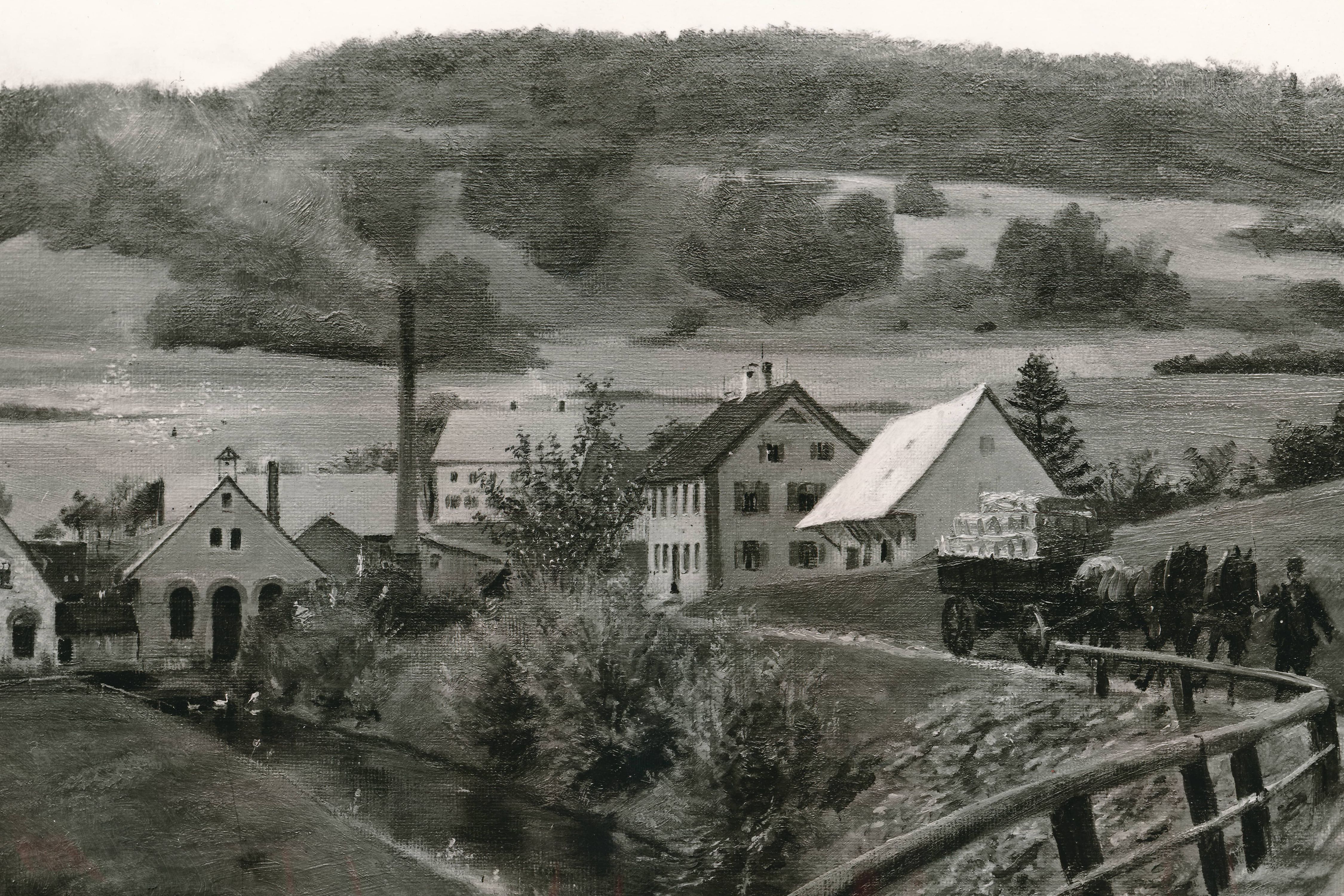
At the age of 26, the merchant Adolf Palm acquired a water-powered factory in Aalen-Neukochen, Germany, to manufacture agricultural iron products. He very quickly converted the production line to produce paper made from secondary fibres; this was an early form of recycling. Adolf Palm discovered a base material, which already the ancient Chinese had used to make paper - bast fibre. The material could be acquired cheaply due to the residue from the local textile industry. Using the motto "excellent and tough natural brown bast paper" to advertise its packaging material, the company manufactured a very innovative and competitive product.
1876
The annual production rate is 220 tonnes.
1918
Adolf Palm hands over the running of the company to both his sons, Otto and Hermann Palm. The annual production rate is 1,500 tonnes.
1921
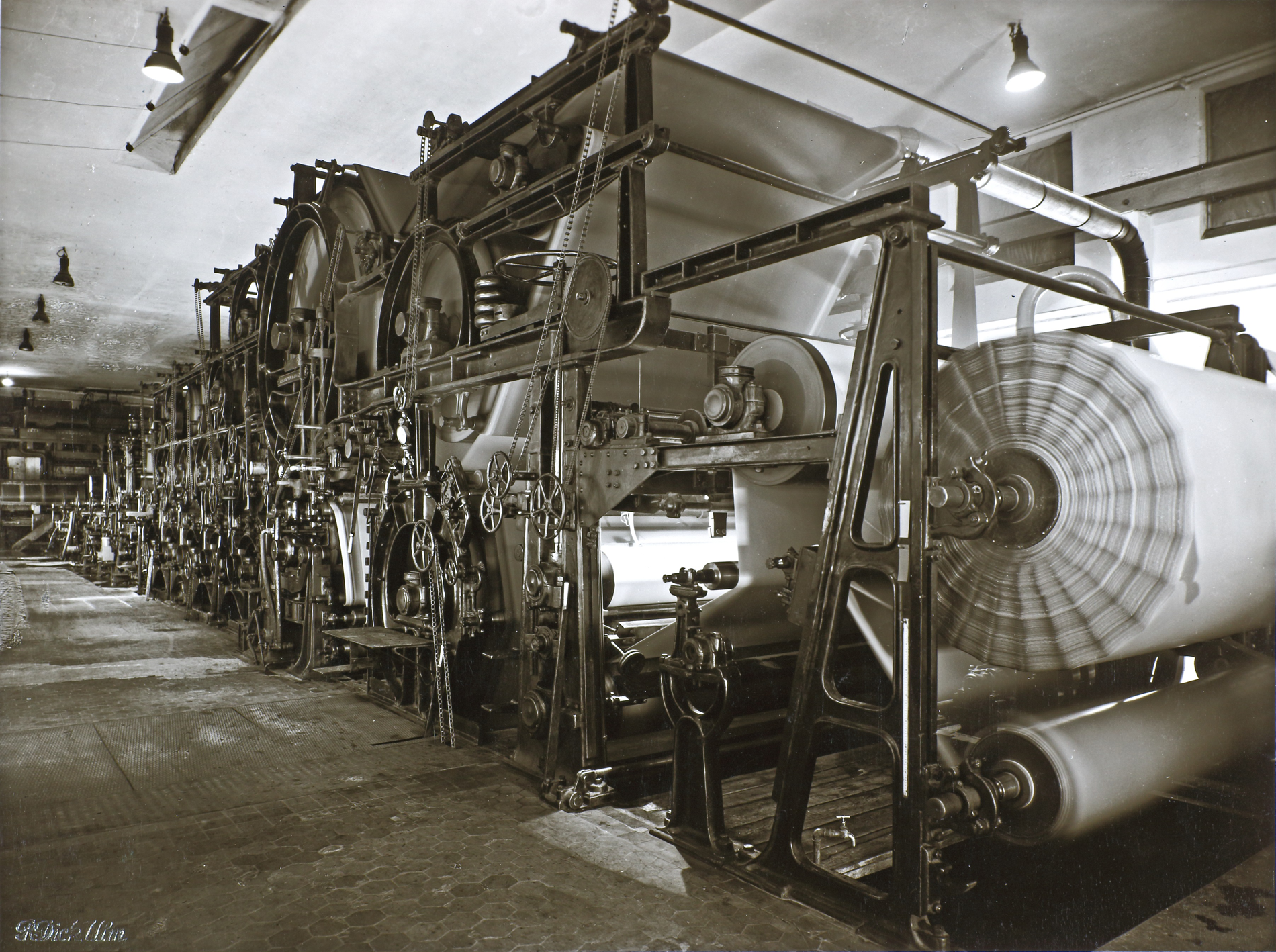
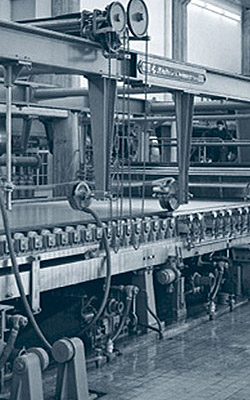
Purchase of a new paper machine made by Voith in Heidenheim.
1952
Dr. Wilfried Palm, the son of Otto Palm, and the Engineer Gottfried Palm, the son of Hermann Palm, joined the management. The annual production rate exceeds 10,000 tonnes.
1956
A second Voith paper machine went into operation.
1984
Palm is the first German paper mill to successfully produce newsprint paper made from 100% recycled paper.
Acquisition of the corrugated board plant in Sinsheim, Germany.
1986
Acquisition of three corrugated board plants in Forchheim, Gelsenkirchen and Höchstädt (all situated in Germany) from the Vereinigte Papierwerke Schickedanz.
1989
The annual production rate in Aalen-Neukochen, Germany, exceeds 240,000 tonnes.
1994
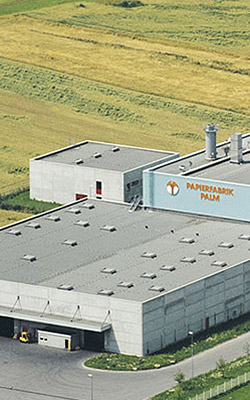
Construction of the paper mill in Eltmann near Bamberg, Germany, and installation of PM1. With this high-performance paper machine the production capacity for newsprint paper was tripled.
1997
Acquisition of the corrugated board plant in Alzenau, Germany.
1998
Acquisition of the corrugated board plant Nestler Wellpappe in Lahr, Germany.
Acquisition of two BECO Wellpappenwerke in Hasselroth and Andernach, both in Germany.
1999
Expansion of the plant in Eltmann, Germany, with the installation of another paper machine, PM 3, producing newsprint.
2000
Acquisition of the processing plant WellPack in Einsiedeln, Switzerland.
2001
Acquisition of the corrugated board plant PilloPak in Eerbeek, the Netherlands.
Acquisition of the processing plant Brenner in Starnberg, Germany.
2002
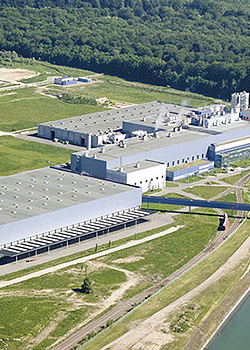
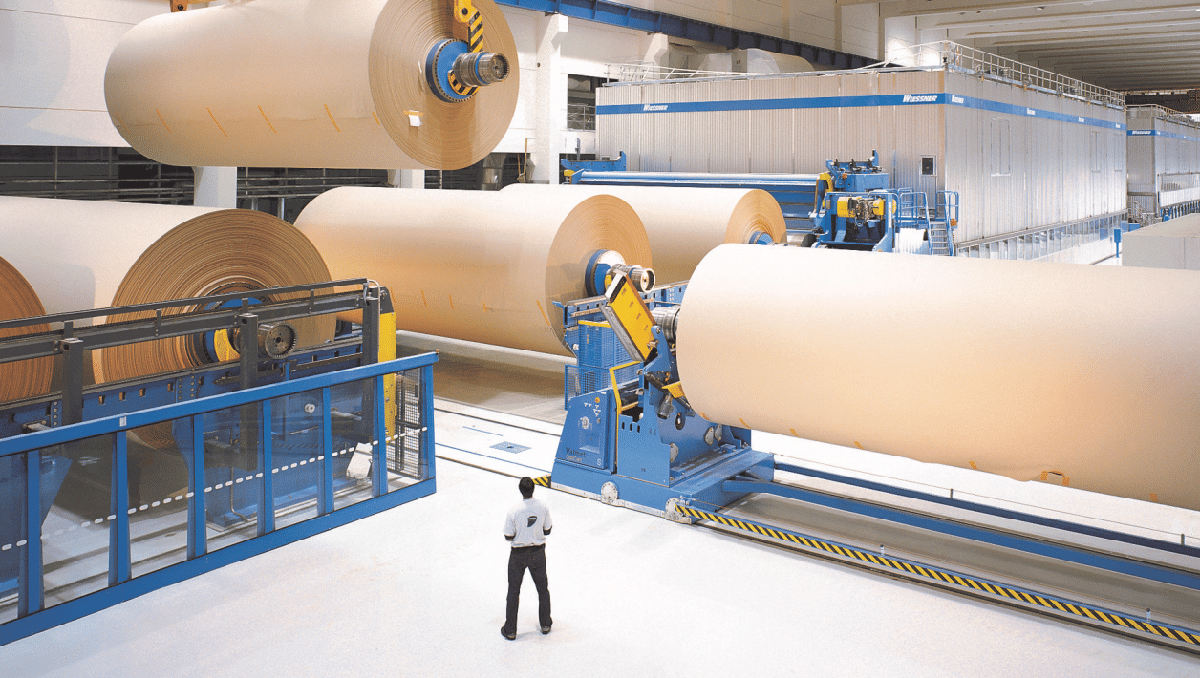
Palm is building another paper mill in Wörth am Rhein on a large industrial site with good links to the railways, the motorway and a port to the river Rhine. With a working width of 10.3 metres, the world's widest paper machine, with an original annual capacity of 600,000 tonnes (now 750,000 tonnes), is the most powerful paper machine in operation at the time. It is the first plant in Europe to produce lightweight corrugated base paper weighing less than 100 g/m².
2007
The corrugated board centre in Wörth am Rhein, Germany, went into operation.
Acquisition of the corrugated board plant Packwell in Schwepnitz, Germany.
2008
Acquisition of the plant for offset packaging Drupack in Villingen-Schwenningen, Germany.
2009
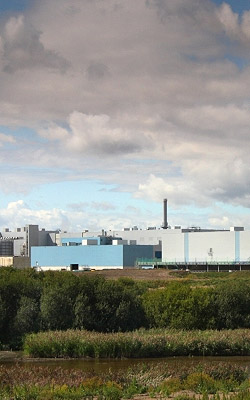
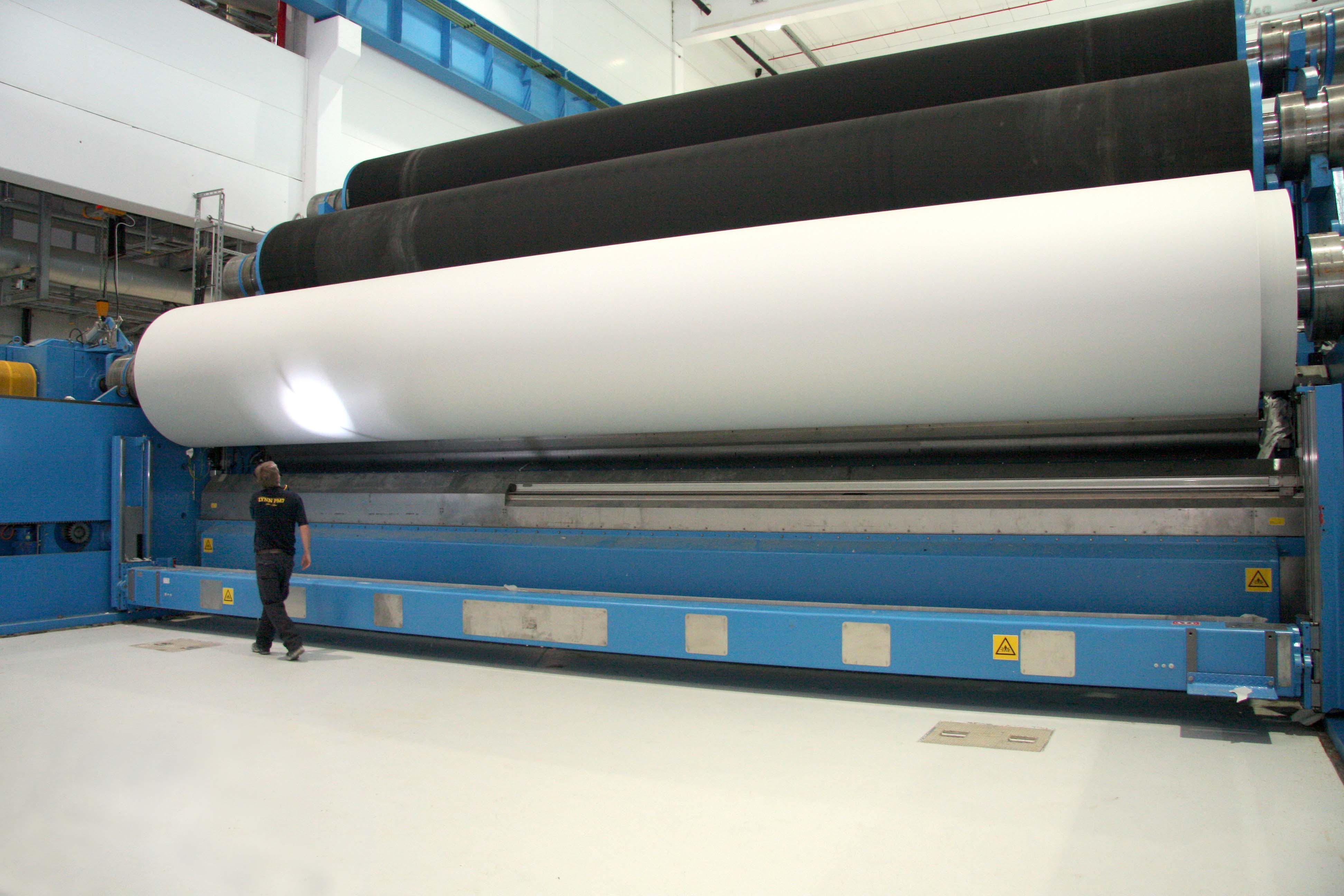
The world's largest paper machine for newsprint went into operation in King's Lynn, Great Britain (90 miles northeast of London). With a working width of 10.63m and a production speed of 2,000m/min, the annual capacity is 400,000 tonnes.
2010
Palm Recycling was established in the UK.
2013
Introduction of Palm Recycling in Aalen-Neukochen, Germany.
2014
Acquisition of the Seyfert Group together with the Descartes paper mill and 5 corrugated board plants in France (Reims, Feurs, Sorgues, Libercourt and Décines) plus 3 corrugated board plants in Germany (Reichenbach, Salzgitter and Monheim am Rhein).
2016
Acquisition of the Corrugated Board Plant in Zorbau, near Leipzig, Germany.
Acquisition of the Corrugated Board Plant in Lugaro d'Erba, Italy.
2019
Acquisition of the REKA Corrugated Board Plant in Kitzingen, Germany.
2021
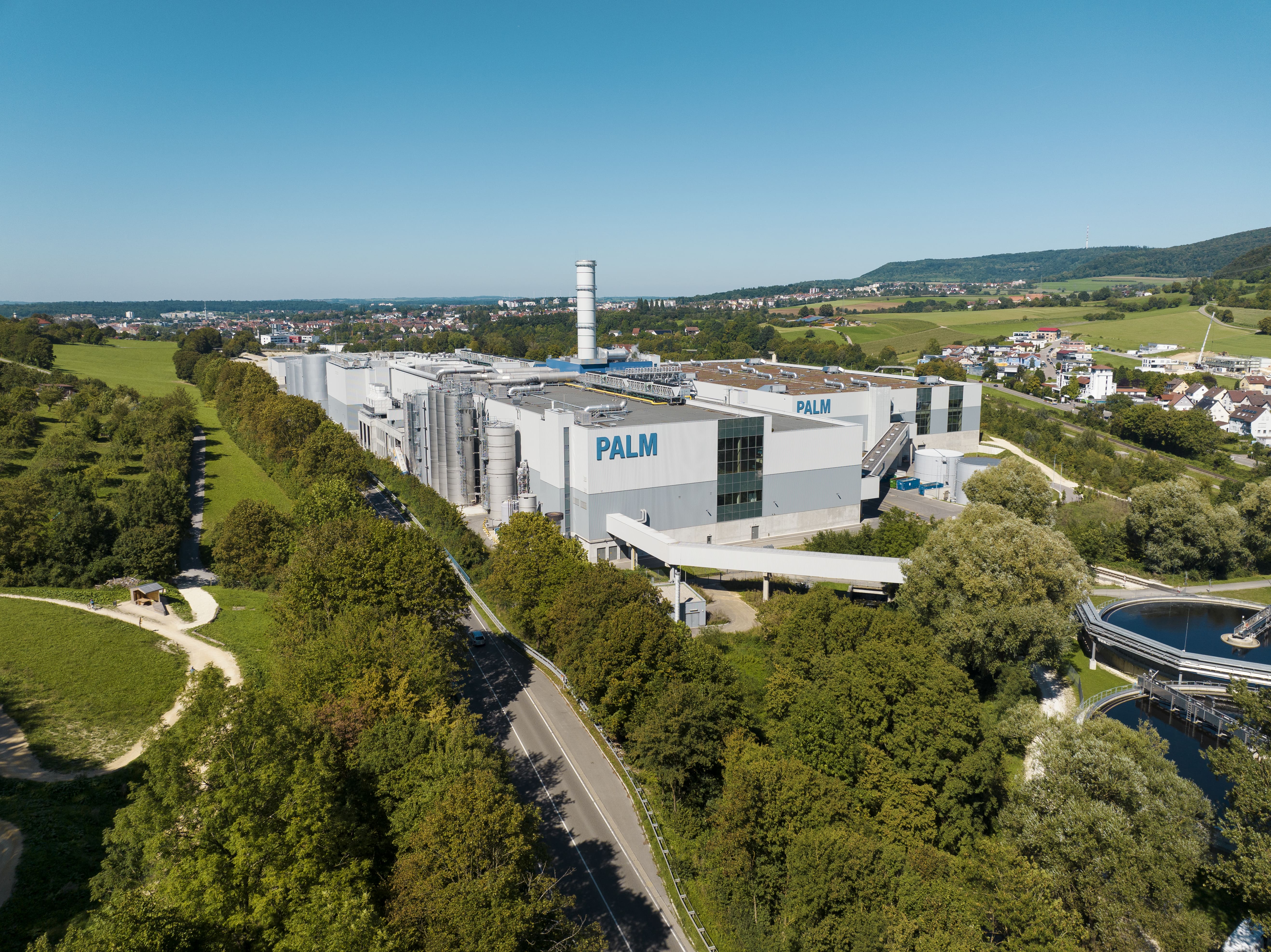
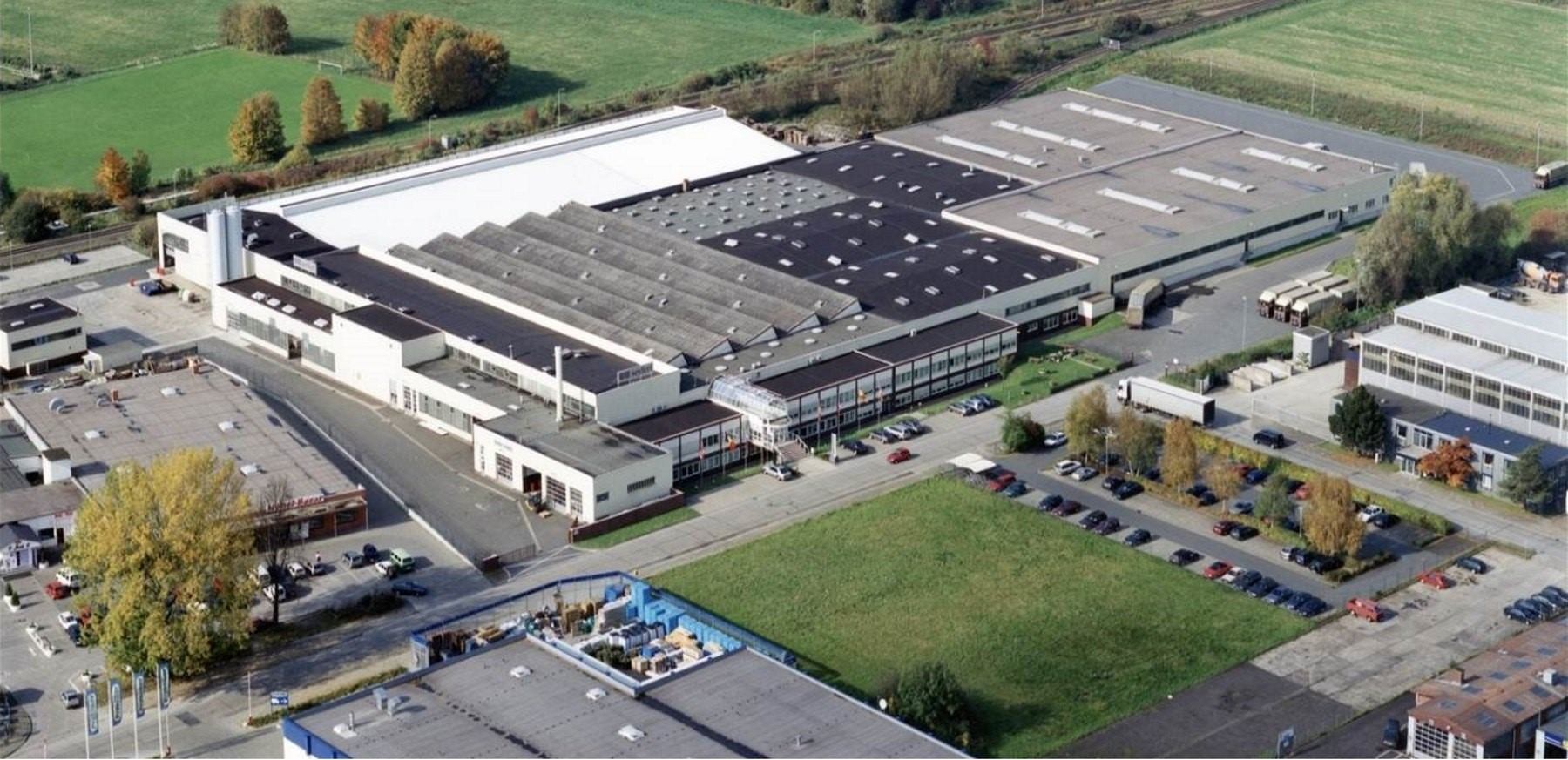
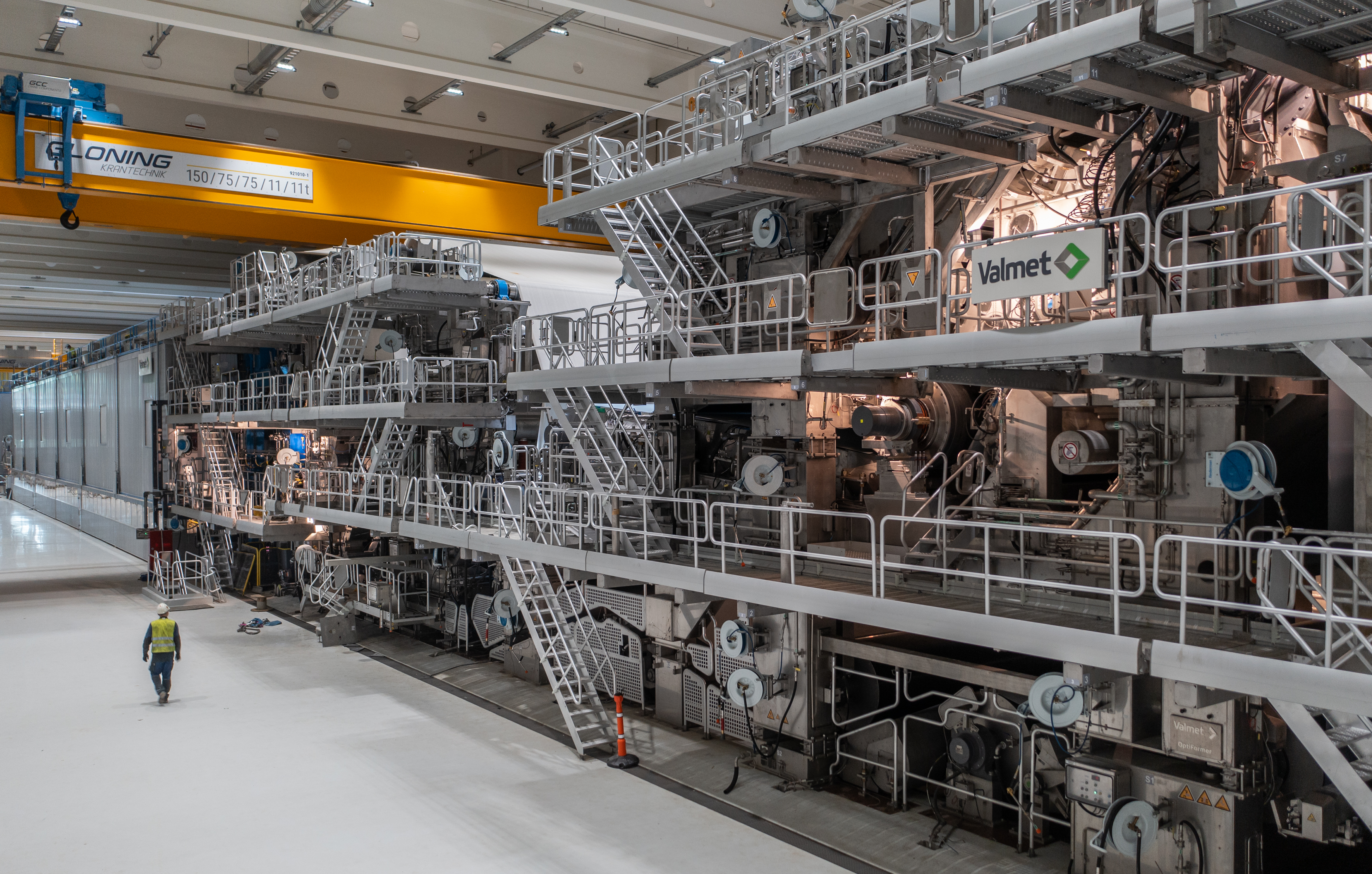
Commissioning of the world's widest paper machine for corrugated case material in Aalen-Neukochen. The annual capacity of PM 5 is 750,000 tonnes with a working width of 10.90 metres. At the new paper mill in Aalen, a new power plant and a new wastewater treatment plant equipped with the latest technology, as well as a new roll storage warehouse, were also commissioned. Thanks to six technological world firsts, lightweight grades down to 60 g/m² can be produced for the first time.
2022
Dr Marina Palm, daughter of Dr Wolfgang Palm, joins the long-established company as the fifth generation.
Acquisition of the corrugated board plant OL Pack in Spino d'Adda, Italy.
Palm celebrates the 150th anniversary of the innovative family business.
2024
Acquisition of the corrugated board format plant John Hargreaves (Collyhurst and Stalybridge) Ltd. in UK.
2025
Acquisition of five corrugated packaging plants in France, Spain and Portugal:
- Palm Packaging Cabourg SAS (north-west France/Normandy)
- Palm Packaging Mortagne SAS (north-west France/Normandy)
- Palm Packaging Saint-Amand SAS (north-west France/Normandy)
- Palm Packaging Bilbao S.L.U. (north-west Spain/Basque region)
- Palm Packaging Ovar S.A. (north of Portugal near Porto)
PALM strengthens its packaging division through a joint venture in the Czech Republic with a 50% stake in Power Packaging s.r.o..